GRI 3-3
HUMAN CAPITAL MANAGEMENT
Grupo Lamosa recognizes that human talent is a key driver of business success. Thus, the company is committed to fostering a positive and safe work environment that promotes collaboration, personal development and employee well-being. Additionally, it implements initiatives to attract highly skilled talent and enhance retention
and engagement.
Beyond complying with labor regulations in all operating countries, Grupo Lamosa offers additional benefits to improve employees’ quality of life.
Grupo Lamosa has 10,829 employees.
55% of the company’s employees have a collective labor contract.
To reinforce the corporate culture and a sense of belonging, the company implements initiatives that promote integration, commitment and an inclusive work environment where all employees feel valued.
As part of its commitment to labor rights, the company employs union personnel in its operations. With support from the Human Resources Department, collective agreements are periodically reviewed in accordance with the legislation of each particular country, to ensure fair compensation and benefits aligned with local labor-market conditions. This ongoing dialogue strengthens relationships based on mutual respect and collaboration.

TRAINING AND DEVELOPMENT
GRI 3-3, 404-2
To support professional growth, Grupo Lamosa offers training programs designed to enhance employees’ skills and competencies across their various roles and functions, focusing on developing the capabilities needed to address workplace challenges and contribute to the company’s success.
TRAINING PROGRAMS FOR OPERATIONS PERSONNEL
In addition to formal training programs, Grupo Lamosa offers an internal digital platform with access to an extensive library of courses covering specialized topics such as leadership, information technology and sales. This resource promotes continuous learning.
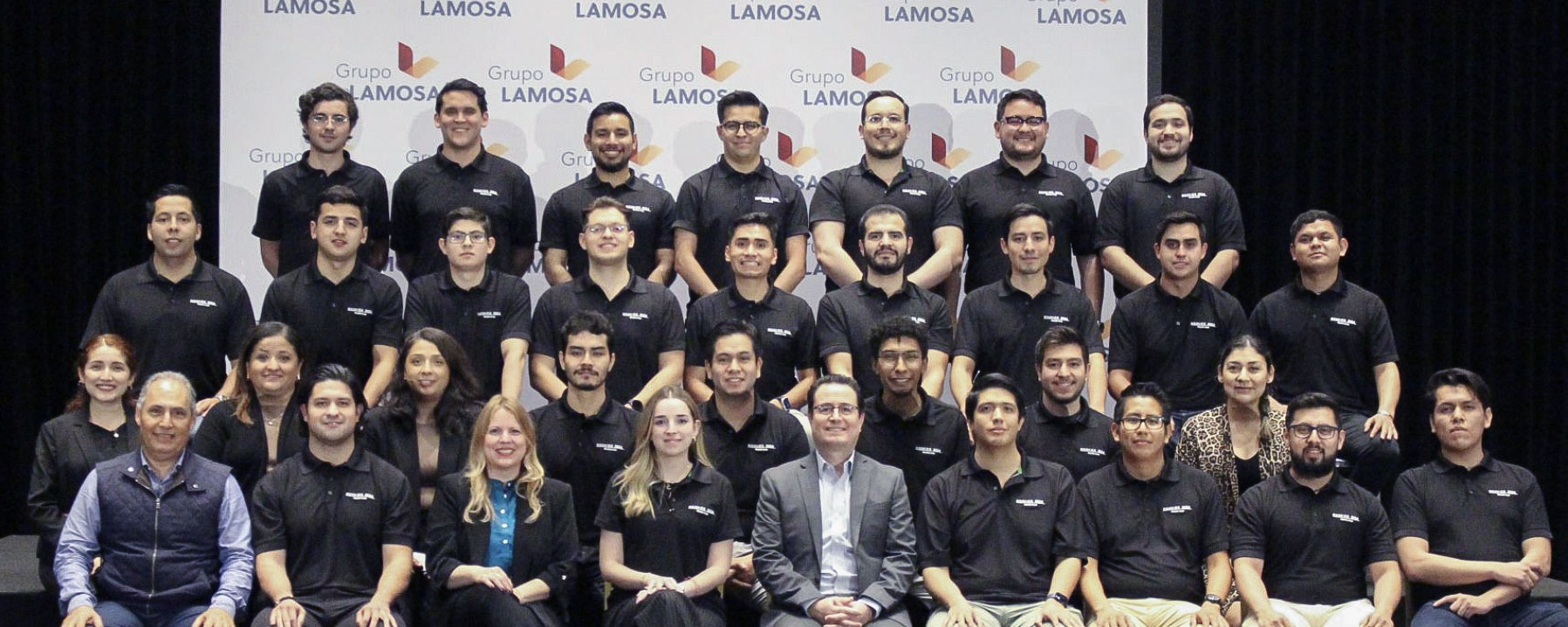
Employees undergo annual performance evaluations, and career development plans incorporate competency assessments every two years to identify growth opportunities.
An average of nine hours of training per employee in 2024.
PROGRAMS FOR ADMINISTRATIVE STAFF
83% job satisfaction in 2024.
WORK ENVIRONMENT AND WELL-BEING
GRI 3-3
To assess and improve the workplace environment, Grupo Lamosa conducts an annual organizational climate survey across its three business units. The survey evaluates key aspects, such as working conditions, motivation, satisfaction, recognition, training and organizational structure, providing valuable insights to identify opportunities for improvement and strengthen employee engagement.
The results are analyzed, and the Human Resources department designs action plans to address areas of opportunity. Monthly follow-ups ensure the effectiveness of these initiatives. To comply with Mexico’s NOM-035 regulations and equivalent requirements in other countries, the survey includes specific questions to identify potential psychosocial risks. The company also provides a specialized psychology service through an external provider to support employees with personal issues, contributing to their overall well-being.
To further support employees, Grupo Lamosa has implemented a program offering a wide range of professional services and assistance in human resources, physical and mental health, and legal matters. Currently available at two plants in Mexico, this program benefits both employees and their immediate families, and the company plans to expand it to other production sites and corporate offices.
Grupo Lamosa values employee loyalty and commitment. Therefore, employees with over 10 years of service receive a special recognition at an event attended by the executive team and the CEO.
DIVERSITY AND INCLUSION
GRI 3-3
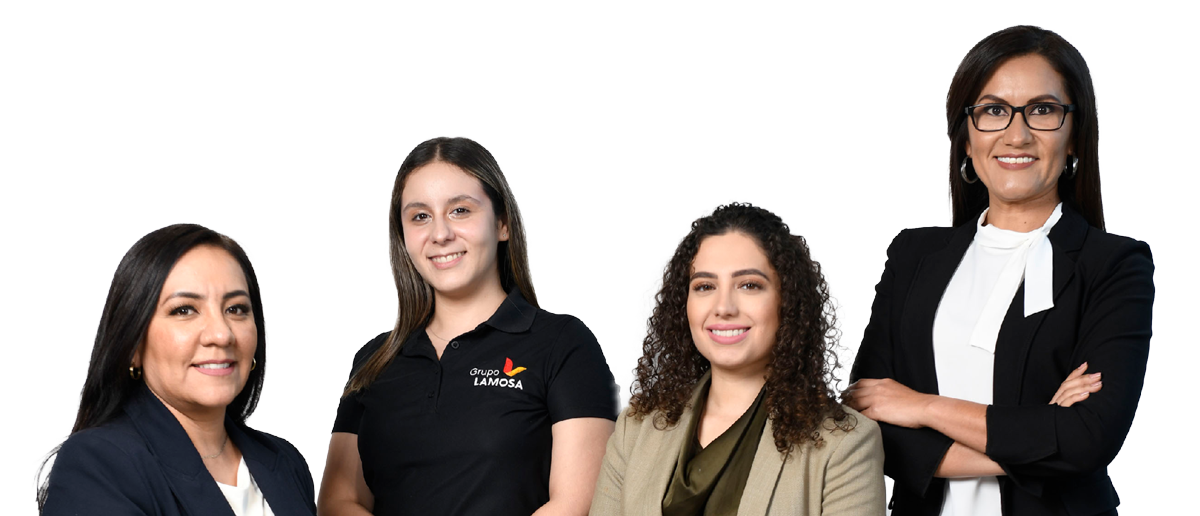
Diversity is a fundamental value for Grupo Lamosa, as it is considered to be a key driver of innovation, growth and an inclusive work environment. The company is committed to promoting women’s participation both within the organization and in the industry through initiatives and opportunities that foster gender equity and strengthen female talent at all levels.
Talent management processes—from recruitment to internal promotions—are conducted with equal opportunities, based on employees’ competencies and performance, without any distinctions due to gender or personal characteristics.
To ensure that all workplace activities and interactions remain free from discrimination, Grupo Lamosa has established a Code of Ethics and a Diversity Policy, which define clear behavioral guidelines. Accessible and secure reporting mechanisms are also in place for any actions that violate the principles of diversity, equity and inclusion.
To promote female leadership and development within the organization, specialized training programs have been implemented, equipping female employees with the necessary skills in leadership, management and decision making. These training sessions support professional growth by providing the knowledge and confidence required to take on higher-responsibility roles.
The goal for 2035 is to increase the percentage of women in the workforce by 20%.*
* This initiative is part of one of the five commitment goals set by Grupo Lamosa in 2024. For more information, refer to Appendix 1.3 ESG Strategy. As of the end of 2024, women accounted for 18% of the total workforce.
The following programs were launched in 2024:
WOMEN READY PROGRAM
Aimed at women in managerial and supervisory roles, this initiative spans over 40 hours and is designed to promote their professional development and strengthen their presence in leadership roles.
In total, 13 women in management and supervisory positions participated in this program in 2024.
WOMEN LEADERS IN DEVELOPMENT
This training program seeks to accelerate the careers of high-potential female employees by providing them with tools to improve interpersonal relationships and, consequently, their work performance. The program consists of 10 training sessions.
In 2024, 36 high-potential women began participating in this initiative.
| STAGES OF GRUPO LAMOSA’S SAFETY MODEL |
|---|
| Stage 0 Safety Model Implementation |
| Adopting and recognizing the Safety Model vision. |
| Stage 1 Safety Model Establishment and Development |
| Laying the groundwork for the model, defining roles and responsibilities, and promoting a safety culture throughout the organization. |
| Stage 2 Safety Model Implementation and Continuous Improvement |
| Defining specific programs for each area, identifying and complying with legal requirements, and implementing training programs, measurement systems and internal communication. |
| Stage 3 Safety Model Institutionalization and Optimization |
| Creating and operating crisis committees, establishing indicator and personnel-certification systems, and implementing prevention and risk-management programs. |
Grupo Lamosa has set the goal of reducing its Total Recordable Incident Rate (TRIR) by 50% to 0.59 in 2035**.
OCCUPATIONAL HEALTH AND SAFETY
GRI 3-3, 403-1, 403-2, 403-3, 403-4, 403-5, 403-6, 403-7, 403-8*; SASB RT-CH-320a.2
Ensuring employee safety and well-being is a number one priority for Grupo Lamosa, so it has implemented its own prevention-focused safety model based on the recommendations of the international Occupational Safety and Health Administration (OSHA)*. The model strengthens the safety culture across all operations, minimizing risks and protecting employees.
The methodology of the model involves a four-stage adoption process, where each worksite is assigned a level based on the extent of the model’s implementation. Committees at the plant, business and corporate levels are responsible for its adoption and implementation.
Additionally, on-site medical personnel provide healthcare services and support annual safety campaigns, events and informational sessions.
In 2024, Grupo Lamosa enhanced daily safety practices by introducing an organization-wide alert system to prevent incident recurrence at its plants. When incidents occur at plants within the same business unit, dedicated team discussions are held to analyze and reinforce preventive measures. For plants in different business units, information is shared without direct intervention, to ensure the widespread adoption of best practices.
A global approach to incident management has also been adopted: in the event of an accident, the highest-ranking site authority reports it directly to the CEO. This measure has positively influenced the organization, strengthening awareness and commitment to safety at all levels.
Furthermore, new standardized safety and health indicators are being introduced across operations. In the safety domain, disparities in accident criteria across countries were identified, leading to the implementation of a unified corporate standard with new categories. In the health domain, professional illnesses specific to each operation and ergonomic factors applicable to all business units were analyzed.
* Grupo Lamosa’s occupational health scheme covers 100% of its employees.
** This is one of the five commitment goals that Grupo Lamosa established in 2024. For more information, refer to Appendix 1.3 ESG Strategy. The TRIF calculates the incident rate by considering minor accidents as disabling. The established baseline is as of 2023, with a rate of 1.17.
COMMUNITY CONTRIBUTIONS
SASB RT-CH-210A.1
Grupo Lamosa maintains close relationships with its local communities, ensuring operational legitimacy based on mutual respect, while contributing to social and economic development.
Key initiatives in favor of the community include the continuous monitoring of potential impacts on surrounding areas to prevent and immediately mitigate any negative effects. Additionally, an ongoing dialogue with local representatives supports various community engagement initiatives across all operating regions.
Initiatives implemented in 2024 included the distribution of school supply kits benefiting 155 children—35 in Bogotá and 120 in Guarne—in rural schools.
The Guarne Entrepreneurship Program, launched in 2017, continued to support local drivers in formalizing transportation businesses. As a result, eight transport companies now move materials from mines to plants, generating employment and strengthening local economies.
In Chile, collaboration with Fundación ALAS led to the construction of accommodation for children requiring surgery and hospitalization at the Institute of Neurosurgery, providing a safe recovery space for patients and their families.
In Mexico, the company led a food donation initiative for the San Judas Tadeo Nursing Home in Tlaxcala. With the participation of nearly 200 employees, food supplies were provided for 74 elderly residents, improving their well-being and quality of life.