Comprehensive Risk Management

Grupo Lamosa employs a systematic methodology for the identification, assessment and mitigation of risks that could affect business continuity and the achievement of its objectives. The process is coordinated by the Internal Audit Department and overseen by the Audit Committee of the Board of Directors.

This institutional approach is also reflected in the Comprehensive Risk Management Policy, which defines the guidelines and methodologies for assessing operational and strategic risks.

Each business unit has a Risk Committee composed of senior executives from key areas, ensuring a comprehensive risk management approach. The committees collaborate with the Internal Audit and Corporate Controllership teams to identify and assess significant risks affecting operations, as well as to develop specific mitigation action plans.

The following table outlines the main risks associated with Grupo Lamosa’s operations, together with the actions the company has implemented for their management.

Main Risks for Grupo Lamosa

Risk Description Management details
FINANCIAL
Fluctuations in exchange rate There is a potential risk due to Grupo Lamosa having a commercial presence in different countries and obtaining revenue streams in the local currency of each of them. Given that the financial results are reported in Mexico, the company’s income and financial performance could be affected by the strength of the peso against other currencies. The company’s Financial Advisory Committee supports the Board of Directors, which is the main body managing financial risks.

Ultimately, financial derivative schemes are contracted to link debt repayments to the local currencies where revenue is generated.
Business liquidity
and debt control
There is a potential risk related to the company’s capacity to ensure the liquidity necessary to cover operating expenses and to settle the debt acquired by each of its subsidiaries. The company seeks to mitigate its businesses’ liquidity risk and control credit debt through its debt reprofiling strategy. This strategy consists of periodically renegotiating debt conditions to obtain better terms and interest rates, thereby freeing up cash flow and contributing to growth.
Increase in
input prices
There is a potential risk related to input price increases, reflecting possible rises in the cost of natural gas and electricity, the company’s main energy sources, the cost of local primary inputs (inflation) and diverse other costs related to the production processes. Ultimately, with the support of the Finance Committee, the need to hedge natural gas consumption through financial instruments and thereby provide certainty in the cost of supply is evaluated.
STRATEGIC
Customer satisfaction and brand value There is a potential risk related to the company’s ability to anticipate possible changes in surface-coverage trends, which would mainly affect the Tile Business. However, Grupo Lamosa encourages the development of new products that provide a differentiating value. It also focuses on product quality and safety, especially for the Adhesives Business, avoiding any potential negative impact on the health and safety of the end customer. Specific innovation committees identify new market trends; co-creation initiatives with distributors are implemented in order to improve product quality and attributes; the company has introduced digital sales channels; and brand perception studies are carried out annually.
Local and international competition There are companies in Mexico and in countries such as the United States, Spain and Brazil whose products could compete with Grupo Lamosa’s in terms of quality and price, which could decrease customer preference and thus the company's market share. Grupo Lamosa’s good financial performance has enabled it to grow geographically, with the acquisition of well-known companies such as FANOSA and Baldocer. This has enhanced its competitiveness in the different countries where it operates.
Intellectual property The company's property rights may be affected by potential imitations and replicas of its products and/or manufacturing designs and/or processes. Any of these possibilities could have an adverse effect on the business’s operating and financial results. Grupo Lamosa has a legal team specialized in the protection of intellectual property, tasked with registering patents and trademarks. It also has confidentiality policies which are communicated to Grupo Lamosa’s different commercial partners and to company personnel.
OPERATING
Attraction and retention of specialized
technical talent
The lack of specialized personnel in the sector could significantly affect production processes and result in a potential loss of the company’s existing talent. Specific training and career development models are in place, as well as an attractive compensation scheme for all employees.
Collective labor contracts In order to avoid any type of interruption in the production processes, it is important to guarantee robust, fair and transparent relations with all employees who have a collective labor contract. The company complies with, and respects, the right of employees to form part of a labor organization, as indicated by Mexican Federal Labor Law and the applicable legislation in the countries where it operates.
Shortage of raw materials There is a potential risk from interruptions in the supply chain, reflecting a lack of qualified local suppliers to guarantee a continuous and efficient supply both in Mexico and in the other countries where the company operates. Grupo Lamosa operates with commercial strategies that enable the diversification of its portfolio of suppliers, as well as effective input planning and inventory management. In parallel, efforts are continuously made to train and support local suppliers.
REGULATORY
Political and
economic context
There is a potential risk that events, such as new trade agreements between countries or economic regulations, could affect or limit the company’s commercial activities, and that social or political instabilities may arise in the different markets where Grupo Lamosa operates. The company is present in nine countries, which reduces the impact that social, political and economic aspects in a given country could have on its business activities, and constantly monitors the situation in the different countries.
Legal, environmental, health and safety noncompliance Grupo Lamosa operates with policies and procedures related to the health and safety of its employees and regulatory compliance. However, risks related to the health and safety of employees may arise, as well as related to possible impacts on the environment, especially with regard to water management and use, and waste generation. Grupo Lamosa strictly adheres to the regulatory and legal framework in force in the countries where it operates.

Through the Grupo Lamosa Code of Ethics, company employees are trained to avoid possibly undesirable practices in the organization that could lead to legal incompliance. The Code also applies to the company’s business partners.

Audit processes are carried out to identify possible internal risks.

Regarding environmental issues, the company has implemented a sustainability strategy, which addresses environmental management aspects over and above compliance with the law, for the benefit of society.

In terms of health and safety, Grupo Lamosa has a proprietary management system based on the recommendations of the international Occupational Safety and Health Administration (OSHA) 18001 standard.

To ensure compliance with occupational safety and environmental regulations, the company operates with a digital platform presenting the main regulations, standards and permits, making it easier to comply with them and anticipate potential changes.

Grupo Lamosa has identified three possible emerging risks that have become increasingly important in recent years, both at the sectorial level and in other related industries, and for which measures are being implemented for the short and medium term to mitigate their impact and guarantee effective management.

Climate Change

Climate change effects range from physical risks, such as floods or natural events that may affect production centers and compromise the availability of raw materials due to permanent damage to local biodiversity, to transition risks that progressively limit the use of traditional energies and fuels, while at the same time hindering access to renewable energies. This is particularly marked in certain countries.

Cybersecurity

The protection of the personal data of distributors, suppliers, business partners and customers, as well as the company’s documents, processes and information, is of vital importance.

Technology for Production Processes

The company must keep abreast of technological changes and innovations in the sector that could require the acquisition of new techniques, materials and/or tools, thereby assuring that it remains at
the forefront of the market and adapts to the changing trends.

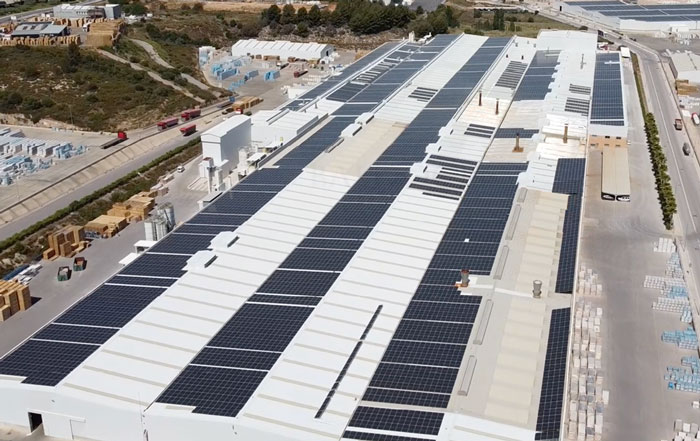
Planta Grupo Lamosa

Reinforcing the Risk Management Framework

In line with its commitment to transparency and the early adoption of international reporting standards, during 2025 Grupo Lamosa conducted a study to identify and quantify risks related to business sustainability.

As part of the risk identification and prioritization process in accordance with IFRS S1 and S2, the company evaluated sustainability and climate-related factors that could reasonably affect its cash flows, financial position and operating performance in the short, medium and long term. The main risks identified include:

Increase in energy costs, driven by volatility in fuel prices—particularly natural gas—and the high energy consumption inherent to the company’s production processes, especially in industrial kiln operations. This risk could generate significant pressure on operating costs and margins and is further intensified by the transition toward low-carbon economies, which requires the continuous adaptation of the company’s operational and technological strategy.

High dependence on specific energy sources, such as natural gas, in the countries where the company operates may create vulnerabilities to changes in the availability, regulation or pricing of these inputs. This could affect operational continuity and limit the company’s ability to respond to disruptions in the energy supply required for critical processes.

Water scarcity, particularly in regions facing water stress, where inadequate resource management could lead to operational disruptions, increased costs and reduced profitability. This risk highlights the importance of expanding water efficiency, reuse and comprehensive water management strategies across the company’s operations.

Through this exercise, the company enhances its resilience and ensures that its business strategy is capable of responding to climate-related challenges in a global environment.