Environmental Management and Climate Strategy
In 2024, five strategic sustainability targets were established, three of which focus on environmental performance, with goals set for 2035.
Grupo Lamosa adopts a proactive approach to managing the environmental impacts inherent to its operations, continuously promoting the identification of innovations and improvement opportunities that contribute to more efficient and environmentally responsible operations.

In June 2025, Baldocer’s plants in Spain obtained ISO 17889-1 certification. This international standard evaluates environmental, social and economic criteria associated with products, providing independent and recognized validation of the company’s practices. Additionally, the Querétaro plant maintains its Clean Industry certification from PROFEPA (Mexico’s Federal Environmental Protection Agency), as a result of its voluntary audits and compliance with environmental regulations.
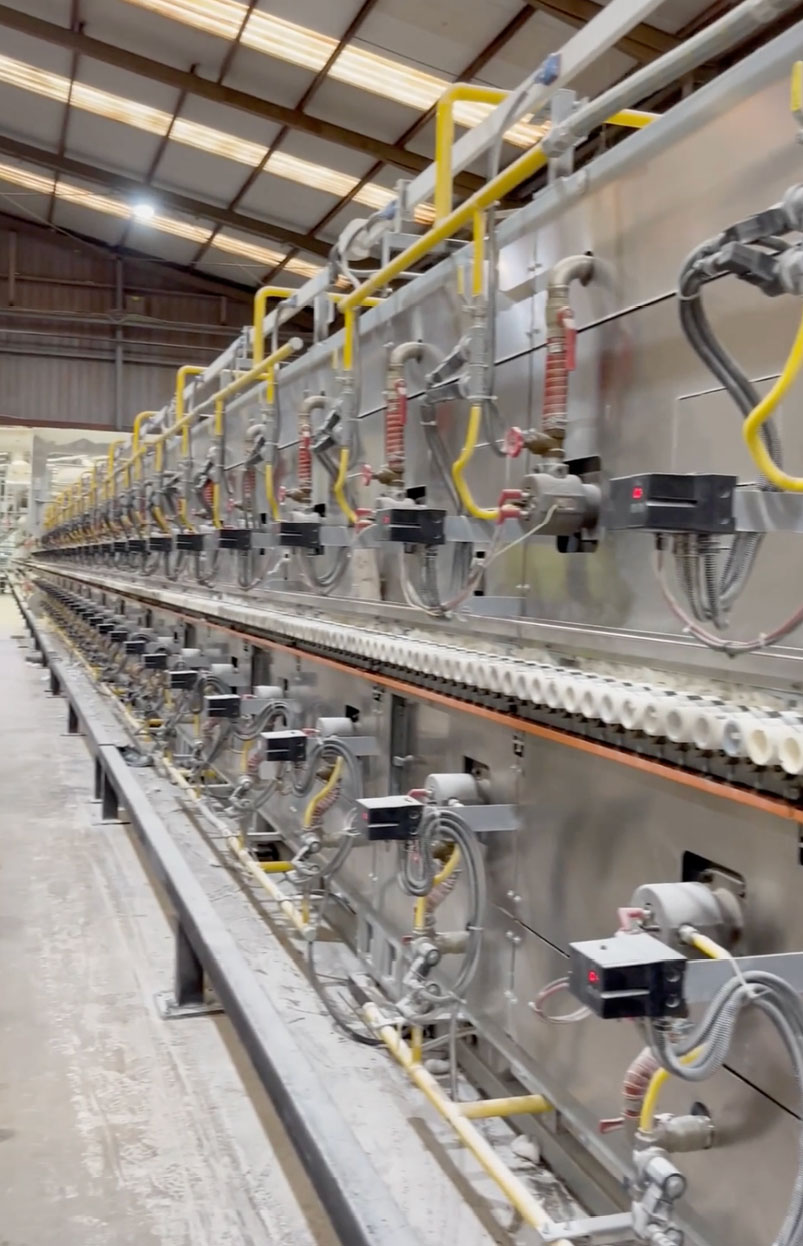
The company also promotes the development of technological projects aimed at improving environmental and energy performance. These include the recovery of water vapor from tile production processes, optimizing water consumption, and the exploration of green hydrogen as a viable alternative to natural gas, with the potential to significantly reduce the emissions associated with operations.
Grupo Lamosa has defined environmental priorities focused on energy efficiency, emissions reduction, responsible water management and proper waste handling. During 2025, progress was made in implementing projects aimed at optimizing energy consumption, strengthening environmental management systems and evaluating technological alternatives to reduce the environmental footprint of the company’s operations.
Climate Action
The company’s climate action objective is to reduce Scope 1 and Scope 2 CO₂ emissions intensity by 25%. The baseline in 2023 was 33.0 tons of CO₂e per thousand pesos of revenue, and by 2025 it had been reduced to 25.7 tons of CO₂e per thousand pesos of revenue.
Energy Consumption and Efficiency
The company contributes to energy efficiency by offering light-colored tiles for exterior applications, helping to mitigate the urban “heat island” effect by reducing solar radiation absorption and improving the thermal efficiency of buildings.
Additionally, EPS products generate a positive indirect environmental impact, as their insulating properties significantly reduce energy consumption in buildings and facilities, contributing to lower greenhouse gas emissions.
Greenhouse Gas Emissions
Grupo Lamosa maintains a greenhouse gas emissions inventory aligned with the GHG Protocol international standard, ensuring the consistency, traceability and reliability of data related to fuel and electricity consumption across its operations.
For more detailed information on energy consumption and emissions, please refer to the environmental section in Appendix 1.7: Key ESG Indicators.
Circular Economy
Grupo Lamosa’s approach to advancing circularity is based on two priority areas: efficient waste management and responsible water use. Through these actions, it seeks to optimize resource utilization, reduce environmental impacts and move toward more sustainable operating models.
Water Management
Grupo Lamosa recognizes water as a strategic resource for its operations. Depending on local conditions, it sources water through different means, including proprietary wells, tanker supply and municipal networks, ensuring operational continuity and responsible use.
The company promotes projects to recover water vapor generated in Tile Business operations, with the objective of optimizing water use and progressing toward a 50% reduction in water withdrawal intensity.
To ensure that the water used in operations is returned to the environment under conditions equivalent to those under which it was extracted, where applicable it undergoes treatment processes under strict quality standards. During 2025, the company was not served with any fines or penalties related to water use or management.
For more information on water withdrawal, consumption and discharge, please refer to the environmental section in Appendix 1.7: Key ESG Indicators.
Waste Management
With regard to waste management, Grupo Lamosa promotes initiatives to increase circularity in its operations, particularly in porcelain tile production, where the reuse of raw and fired waste has been significantly increased.
The company also promotes recirculation and valorization of waste through the sale of non-hazardous materials and the refurbishment of pallets, a practice increasingly adopted across its operations, contributing to waste reduction and efficient resource use.
For more information on waste generation, please refer to the environmental section in Appendix 1.7: Key ESG Indicators.
Sustainable Materials
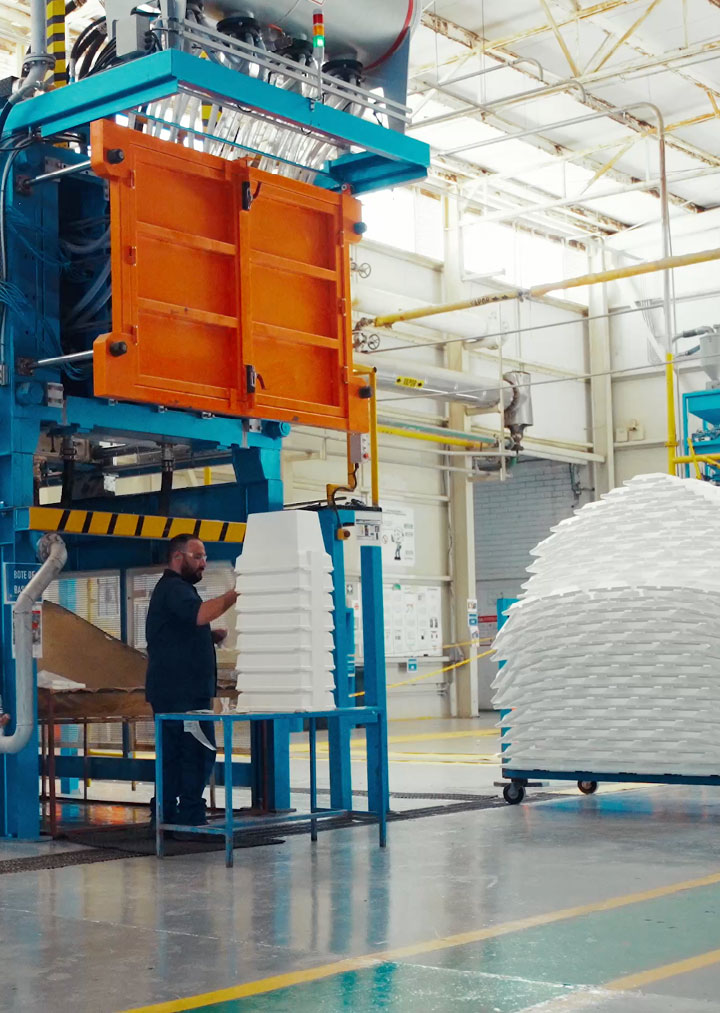
The Insulation and Lightweight Materials Business is progressively incorporating recycled materials into its expanded polystyrene (EPS) production, contributing to resource efficiency and the circular economy. This business holds certification from SEMARNAT authorizing it to collect materials for recycling.
For more information on FANOSA’s contribution to sustainable construction materials, please refer to Appendix 1.4: Associations, Initiatives, Certifications and Recognitions.